

Try this daily yoga routine to build strength and increase flexibility. Improve your mental clarity, physical and emotional well-being today!
Do you often feel overwhelmed by daily life, lacking both physical and mental energy? Many people balance work, relationships, and personal goals, leaving little time for self-care. A daily yoga routine can help, as Maharishi Patanjali noted: it calms the mind and helps us find true self-clarity. How can you create a daily yoga practice that builds strength, improves flexibility, and helps clear your mind during busy times?
When people think of yoga, they usually imagine complex poses done by flexible people. While it’s important to build strength and flexibility, yoga is more than a purely physical practice. It offers a complete approach to well-being. “This includes eight parts outlined by Patanjali: Yama, Niyama, Asana, Pranayama, Pratyahara, Dharana, Dhyana, and Samadhi”, Yoga Expert Dr Narendra K Shetty tells Health Shots. To benefit from yoga, we should make it a part of our daily lives. By including its principles in our routines, we support our mental clarity, emotional stability, and physical health.
How to perform sukshma vyayama?
To start your daily routine, begin with Sukshma Vyayama. This series of gentle movements helps loosen your body and get it ready for more challenging positions. “Warming up enhances circulation and wakes up your muscles”, says the expert. After this, move into Surya Namaskar (Sun Salutation). This introductory sequence warms up your body and is a great way to prepare for different poses.
-
Utkatasana (Chair Pose)
Utkatasana, or Chair Pose, is a standing yoga pose that strengthens the legs and core while improving balance and focus. Stand with feet together or hip-width apart. “Inhale and raise your arms overhead, then exhale and bend your knees as if sitting back in a chair, keeping your knees behind your toes”, says the expert. Hold for several breaths to engage your thighs and stretch your spine. Benefits include better posture and stimulation of the heart and diaphragm.
2. Trikonasana (Triangle Pose)
This foundational yoga pose enhances flexibility, strength, and balance. Stand with feet wide apart, turn one foot out, and extend your arms to the sides. “Bend at the hips to reach toward the extended foot, placing your hand on your ankle, shin, or the floor, while extending the other arm upward”, says the expert. This pose stretches the legs, opens the hips, and improves stability.
3. Vrikshasana (Tree Pose)
Vrikshasana, or Tree Pose, is a balancing pose in yoga. Stand with feet together, shift your weight to one leg, and place the opposite foot on your inner thigh or calf. “Bring your palms together at your chest or raise them overhead”, says the expert. Hold the pose while breathing steadily, then switch sides. This pose strengthens legs, improves balance, and enhances focus.
4. Tadasana (Mountain Pose)
Tadasana, or Mountain Pose, is a foundational yoga pose that promotes good posture, stability, and balance. “Practised at the start of a yoga session, you stand tall with feet together, arms at your sides, and engage your core”, says the doctor. This pose helps cultivate body awareness and a strong connection with your breath.
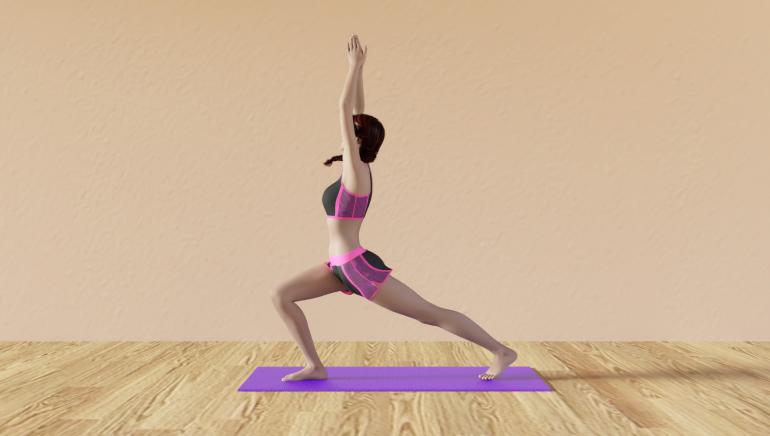
5. Virabhadrasana (Warrior Pose Variations)
Virabhadrasana, often called Warrior Pose, encompasses several variations commonly practised in yoga. Each variation emphasises strength, stability, and focus.
Which yoga poses build strength?
Many people think that strength training needs weights or high-impact exercises. However, you can build strength through yoga by holding poses that use isometric contractions. For example, you can include Phalakasana (Plank Pose), Bhujangasana (Cobra Pose), and Dhanurasana (Bow Pose) in your routine. “These poses engage multiple muscle groups and help improve endurance without putting too much stress on your joints”, says Dr Shetty. Holding a pose for a longer time helps your fascia, the tissue around your muscles, get stronger. It’s important to use a gentle but firm approach: moving slowly builds strength while reducing the risk of injury.
How does breathing help with flexibility?
Flexibility involves finding the right balance between tension and relaxation, not just stretching. One effective way to improve flexibility is to use contrast breathing.
- Take a deep breath and tighten the muscles you want to stretch.
- Imagining your body as a closed fist can be a helpful image.
- Breathe in deeply for a moment, then exhale fully with a deep sigh.
As you breathe out, let go of the tension in your body, especially in areas that hold stress, like your jaw, shoulders, and often your mind. “This helps your muscles relax and allows for a deeper stretch”, shares Dr Shetty. Practising this regularly not only improves your flexibility but also makes you more aware of bodily sensations we often ignore in our busy lives.
You may also like


What is the connection between yoga and mindfulness?
Mental fatigue is a common problem. Yoga can help by restoring balance to your body. It shifts your state from alert and stressed to relaxed and calm. Regular yoga practice can help reduce stress. Including Dhyana (meditation) in your routine can help calm your mind.
“Techniques such as Yoga Nidra and the Mind Sound Resonance technique lead you to deep relaxation, allowing your mind to reset and recharge”, says Dr Shetty. Yoga is important for balancing neurotransmitters such as GABA, serotonin, and dopamine. These chemicals help improve your mood and mental clarity. By practising yoga, you can boost your emotional state and your overall cognitive abilities.
How do you connect breath and movement?
As you finish your session, move into restorative poses like Legs-Up-The-Wall Pose (Viparita Karani) and Plough Pose (Halasana). These poses help your body relax and absorb the work you’ve done. “Combine them with breathing exercises like Alternate Nostril Breathing (Nadi Shodhana) and Bee Breath (Bhramari) to boost relaxation and mindfulness”, says Dr Shetty. Taking even a few moments to be still can have benefits. This simple practice of breathing and moving together can help break the habit of overthinking.


